
HBO’s three-part true crime docuseries The Pet Cemetery Murders: A Ghost Story (2026) chronicles the brutal 1985 killing of 61-year-old Dorothy Lou Thompson in St. Bernard Parish, Louisiana. Dorothy, who inherited and operated the secluded Azalea Original Pet Cemetery in Toca Village, was shot and dumped in the Mississippi River wrapped in heavy steel chains. Decades after the investigation stalled and Hurricane Katrina washed away all physical evidence, cold-case detectives convicted local handyman Brandon Nodier of second-degree murder.
| Entity / Individual | Real-World Role | Location / Jurisdiction | Documented Case Outcome |
|---|---|---|---|
| Dorothy Lou Thompson | Victim & Pet Cemetery Owner | Toca Village, St. Bernard Parish, LA | Murdered in April 1985; body recovered in Mississippi River |
| Brandon Nodier | Convicted Killer & Former Handyman | St. Bernard Parish, Louisiana | Convicted of second-degree murder; serving life at Angola |
| Detective John Doran | Lead Cold-Case Investigator | St. Bernard Parish Sheriff’s Office | Reopened file in 2004; secured jury verdict without physical exhibits |
| Azalea Original Pet Cemetery | Crime Scene & Historic Burial Ground | Bayou Road, Toca Village, Louisiana | Overgrown bayou pet graveyard at the center of local ghost lore |
| Hurricane Katrina | Catastrophic 2005 Natural Disaster | St. Bernard Parish, Louisiana | Flooded parish evidence lockup, destroying all original 1985 forensics |
The Disappearance: What happened at the Azalea Pet Cemetery in 1985?
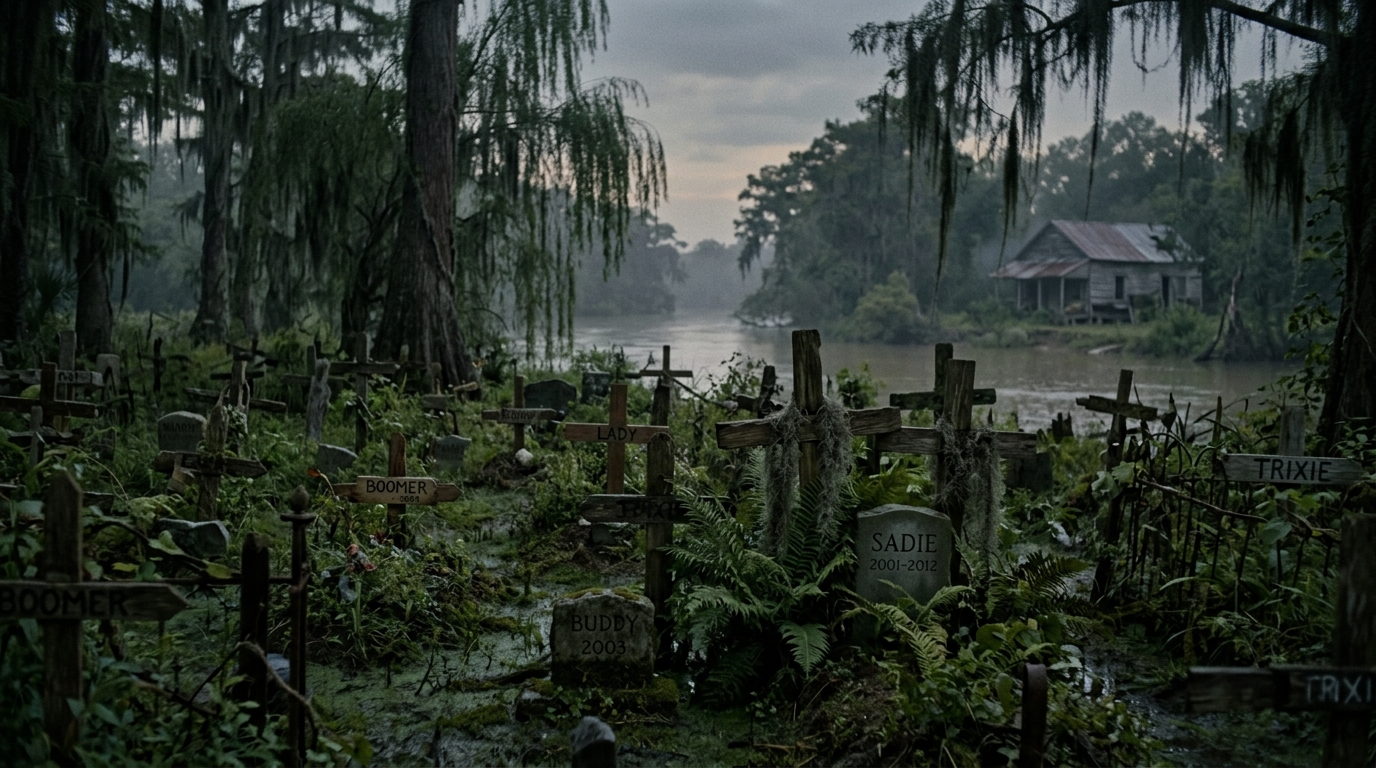
If you have been binging true crime on HBO lately, director Philip Cairney’s The Pet Cemetery Murders: A Ghost Story stands out as one of the most unsettling Southern gothic cases in recent memory. The docuseries centers on Dorothy Lou Thompson (also known in court records as Dorothy Lou Wynne Banks Robinson), a reclusive 61-year-old woman living on a quiet, moss-draped patch of bayou country in Toca Village.

Dorothy lived on the grounds of the Azalea Original Pet Cemetery, a peculiar business founded decades earlier by her mother, Grace Agnes Matt. She was known around the parish as a frail, eccentric soul who kept to herself, surrounded by the graves of beloved hunting dogs, family cats, and marshland flora. But on April 14, 1985, neighbors noticed her cottage sitting silent. Her pets wandered unattended, and Dorothy had vanished into thin air.
Less than three weeks later, on May 2, 1985, tugboat workers noticed something gruesome bobbing near the muddy banks of the Mississippi River downriver in Plaquemines Parish. Dorothy’s body was wrapped in heavy metal towing chains and bound with cinder blocks.
She had been shot twice before being pitched into the water. Despite immediate community outrage, the trail went icy cold, and for nearly two decades, her murder remained an unsolved bayou ghost story.
The Katrina Catastrophe: How Detectives solved a cold case without physical evidence
The breakthrough did not arrive until 2004, when St. Bernard Parish Sheriff’s Detective John Doran decided to pull Dorothy’s dusty homicide binder off the shelf. Doran began re-interviewing aging neighbors, parish deputies, and former employees who had worked odd jobs clearing brush around the cemetery grounds.
Just as the investigation started gaining real traction, disaster struck. In August 2005, Hurricane Katrina slammed into southeast Louisiana, breaching the levees and submerging St. Bernard Parish under fifteen to twenty feet of toxic seawater. The sheriff’s evidence lockers, paper case files, original ballistics, and physical crime lab exhibits were completely wiped out. Alot of cold cases died permanently in that flood.
Detectives refused to abandon the file. Working from reconstructed interview notes and federal backup archives, Doran tracked down Brandon Nodier, an ex-convict who lived close to Dorothy’s property and had done manual labor on her pet cemetery. The turning point came when investigators interviewed Nodier’s ex-wife, Bonnie.
Her chilling testimony, combined with accounts from associates who helped transport chains and firearms, painted a damning picture of robbery and premeditated murder. Without a single piece of physical DNA laying in an evidence locker, prosecutors convinced a Louisiana jury that Nodier was guilty beyond reasonable doubt.
The Haunting of Toca Village: Why is it subtitled “A Ghost Story”?
What makes this docuseries unique among prestige true crime shows is how earnestly it treats the supernatural claims surrounding the property. Toca Village is a tiny community where folklore and daily life blend easily together. Long after Dorothy was buried at Saint Bernard Memorial Gardens, locals reported eerie phenomena near the overgrown pet cemetery.

People driving down Bayou Road late at night swore they saw a translucent silhouette pacing between the miniature marble headstones. More importantly, Detective Doran revealed that one crucial informant came forward specifically because of the ghost. The witness claimed Dorothy’s restless spirit visited him in recurring nightmares, refusing to grant him peace until he picked up the phone and told detectives what Brandon Nodier had bragged about decades earlier.
And honestly, whether you believe in apparitions or not, that psychological haunting was real enough to break twenty years of terrified silence. Someone could of easily taken that secret to their grave, but guilt and local ghost lore forced the truth out into the daylight.
Where is killer Brandon Nodier now?
Following his arrest and an emotional courtroom trial, Brandon Nodier was formally convicted of second-degree murder for the death of Dorothy Lou Thompson. Under Louisiana law, second-degree murder carries a mandatory sentence of life imprisonment at hard labor without the possibility of parole, probation, or suspension of sentence.
Nodier was remanded to the Louisiana State Penitentiary, known infamously as Angola, where he remains incarcerated today. His subsequent legal appeals claiming insufficient evidence were repeatedly dismissed by state appellate courts.
Decades after Dorothy was chained and drowned in the Mississippi River, her cold case stands as one of the rare post-Katrina murder convictions achieved entirely through old-fashioned detective shoe-leather and stubborn perseverance.
FAQs
Brandon Nodier, a local handyman and ex-convict who lived near the Azalea Original Pet Cemetery, was convicted of second-degree murder for killing Dorothy Lou Thompson and dumping her body in the Mississippi River.
Yes. When Hurricane Katrina flooded St. Bernard Parish in August 2005, all physical forensic evidence and original crime lab exhibits from the 1985 case were destroyed. Prosecutors secured a conviction relying on reconstructed witness statements and circumstantial testimony.
Brandon Nodier is serving a mandatory sentence of life imprisonment without parole at the Louisiana State Penitentiary (Angola) in West Feliciana Parish, Louisiana.
