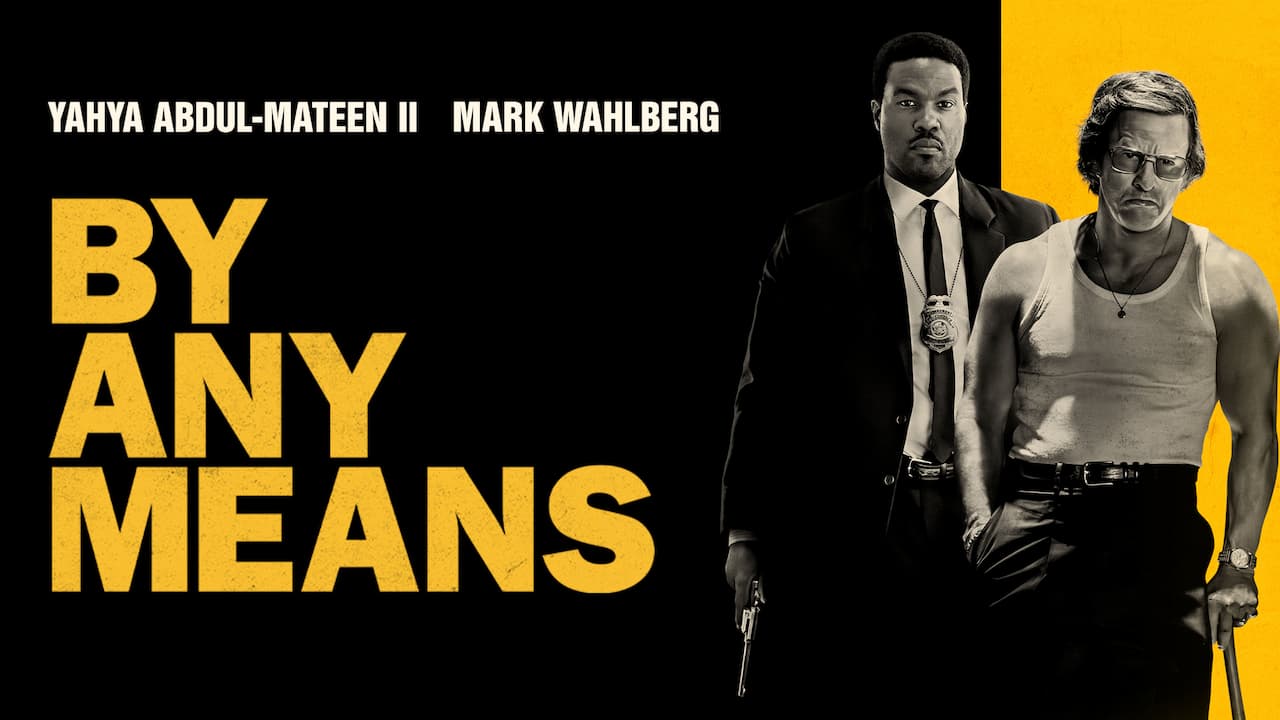
Curious if By Any Means is based on a true story? The short answer is yes.
Paramount’s crime thriller draws directly from the 1966 murder of Mississippi civil rights leader Vernon Dahmer. Here’s what really happened—and what the film changed.
Director Elegance Bratton brought the story to the screen from a script by Sascha Penn. It uncovers one of the most controversial covert operations in FBI history.
The film hit theaters in September 2026 and now streams on major digital video platforms.
| Character / Story Event | Real-Life Person / Record | Historical Date / Location | Factual Outcome / Status |
|---|---|---|---|
| Wayne Strider (FBI Agent) | Fictional Composite Character | 1966; Mississippi Field Office | Invented for the film to center a Black agent in the investigation. |
| Gregory Scarpa Sr. (“The Grim Reaper”) | Real Colombo crime family capo & FBI Informant (NY-3461 / “34”) | Brooklyn, NY & Forrest County, MS | Secretly hired by the FBI; used vigilante violence to force Klansmen to talk. |
| Vernon Dahmer Sr. | Forrest County NAACP President & Voting Rights Champion | January 10, 1966; Hattiesburg, MS | Killed by KKK firebombers after firing back to let his family escape. |
| Samuel Bowers | Imperial Wizard of the White Knights of the KKK | Laurel & Hattiesburg, MS | Ordered Dahmer’s murder; finally convicted in 1998; died in prison in 2006. |
| Anthony Villano | Scarpa’s FBI Handler & Special Agent | New York Field Office | Authorized Scarpa’s covert southern trip under J. Edgar Hoover’s directives. |
| Lawrence Byrd | White Knights Klansman & Radio Repairman | January 1966; Laurel, MS | Kidnapped and beaten by Scarpa into providing signed confessions. |
| Original Screenplay | “CI-34” by Sascha Penn & Theodore Witcher | 2018 Black List Script | Adapted into By Any Means by Hammerstone Studios and Thunder Road. |
Is By Any Means based on a true story?
Paramount’s historical crime drama blends verified FBI archival files with dramatic composite figures. The central crime at the heart of the script isn’t made up. In January 1966, a squad of white supremacists firebombed the home of a prominent civil rights organizer in Forrest County, Mississippi.
That murder caused national outrage. J. Edgar Hoover came under immense pressure from the White House to crack the case without delay. But local Mississippi lawmen refused to cooperate with federal investigators.
The Bureau hit a brick wall. So they took an extreme detour.
Hoover’s top aides arranged for a lethal New York mob enforcer to fly down south on an off-the-books mission. The movie takes that shocking historical truth and pairs the mobster with a young Black federal agent. While the partnership is built for Hollywood drama, the undercover mob operation really happened.
Is FBI Agent Wayne Strider based on a real person?
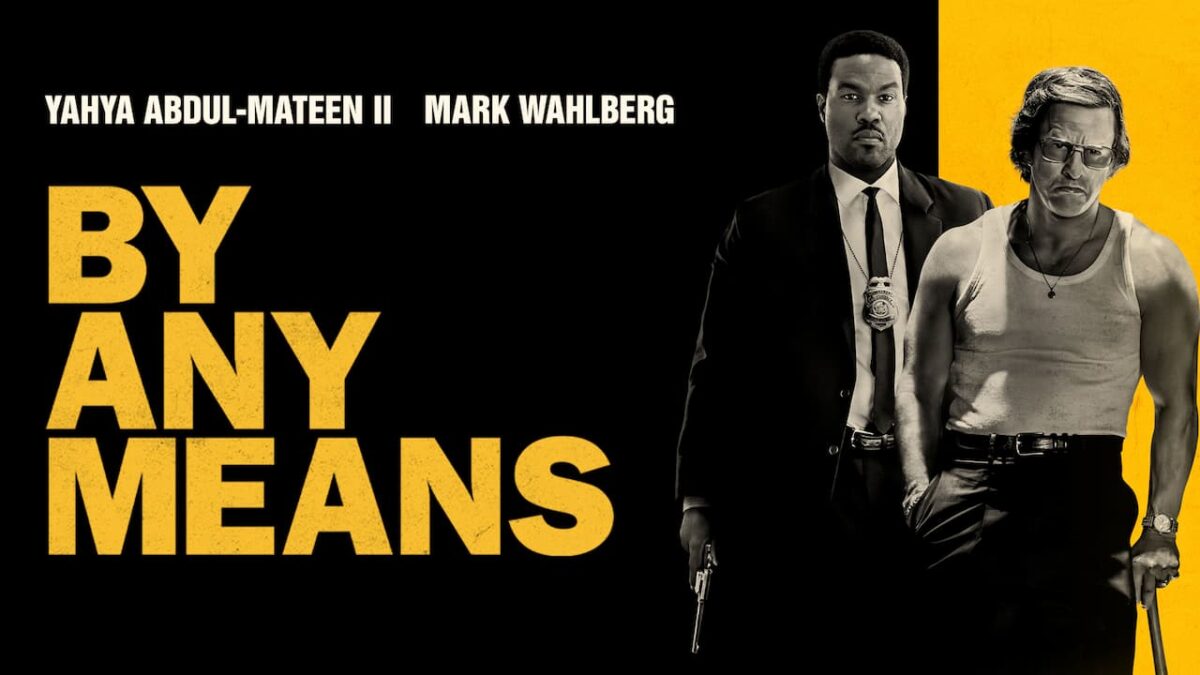
Yahya Abdul-Mateen II portrays a completely invented federal agent. There was no real FBI special agent named Wayne Strider assigned to Mississippi in 1966.
In fact, the Bureau employed almost no Black special agents during that era. J. Edgar Hoover spent decades resisting racial integration across his investigative ranks. The few Black agents who worked for the FBI in the mid-1960s were largely assigned to northern offices or ceremonial details.
None of them were sent to Mississippi to run a mobster.
Director Elegance Bratton and screenwriter Sascha Penn created Strider as an intentional composite. They wanted to explore what that brutal assignment would feel like for a Black officer caught between federal bureaucracy and violent white supremacists. Strider acts as the moral conscience of the film, pushing back against the mobster’s lawless methods.
Actor Sterling K. Brown was originally cast in the role back in late 2024. Scheduling conflicts forced Brown to exit the project in February 2025, handing the badge to Abdul-Mateen.
Who was the real Greg Scarpa?
Mark Wahlberg plays one of the most notorious contract killers in American Mafia history. Gregory “The Grim Reaper” Scarpa Sr. was a high-ranking capo in New York’s Colombo crime family. He claimed to have murdered dozens of people during decades of mob warfare.
He was also living a double life. As early as 1960, Scarpa signed on as a top-echelon confidential informant for the FBI under the code name “34” (and record file NY-3461).
His primary handler was Special Agent Anthony Villano. In exchange for steady intelligence on the Five Families, federal agents helped Scarpa avoid jail for gambling, extortion, and armed robbery.
He stayed on the federal payroll for over thirty years. That arrangement remains one of the dirtiest compromises in the history of American policing.
Did the FBI really use a mafia hitman to solve Mississippi civil rights murders?
Declassified Bureau files and memoirs from handling agents confirm J. Edgar Hoover sanctioned mob muscle. In fact, Scarpa was flown to Mississippi twice.
His first trip took place in August 1964 during the “Mississippi Burning” investigation into the murders of James Chaney, Andrew Goodman, and Michael Schwerner. Scarpa allegedly kidnapped a local appliance salesman and Klansman, shoved a gun barrel into his mouth, and extracted the location where the civil rights workers were buried.
In January 1966, the Bureau called Scarpa back to Mississippi after the Dahmer murder.
Agent Villano flew south with Scarpa. Working off federal surveillance tips, Scarpa tracked down a suspected Klansman named Lawrence Byrd in Laurel, Mississippi. Scarpa kidnapped Byrd, hauled him into an isolated location, and beat him until Byrd agreed to identify the men who threw the firebombs.
“Scarpa was the most effective informant the bureau had against the mob, but sending him into Mississippi was something completely off the books.”
— Anthony Villano, Brick Agent: Inside the Mafia for the FBI (1977)
Byrd signed a full confession shortly after his run-in with Scarpa. His testimony broke the case open for federal prosecutors.
Who was Vernon Dahmer in real life?
Giancarlo Esposito portrays Vernon Dahmer Sr., a respected commercial farmer, grocer, and president of the Forrest County NAACP. Dahmer dedicated his adult life to helping Black Mississippians register to vote during the height of Jim Crow.
He ran a small grocery store next to his home in the Kelly Settlement just outside Hattiesburg. When white county registrars imposed impossible poll taxes, Dahmer publicly announced on the radio that he would pay the poll tax for any local resident who couldn’t afford it.
That announcement enraged the White Knights of the Ku Klux Klan.
“If you don’t vote, you don’t count.”
— Vernon Dahmer Sr., Forrest County NAACP (1965)
In the early morning hours of January 10, 1966, two carloads of armed Klansmen pulled up to Dahmer’s property. They lobbed jugs of gasoline through the windows and opened fire with shotguns. The house erupted into flames.
Dahmer stood at the front door, exchanging gunfire with the night riders so his wife Ellie and young children could escape through a back window. He held off the attackers, but the intense heat seared his lungs. He died in the hospital hours later at age 58.
What happened to Vernon Dahmer’s killers?
Justice moved at an agonizing crawl through Southern courtrooms. Federal prosecutors indicted sixteen Klansmen in connection with the firebombing. Four men received state convictions on lesser charges, but Imperial Wizard Samuel Bowers escaped punishment for decades.
Bowers walked free after two separate state murder trials ended in hung juries in 1968 and 1969. White jurors refused to convict him.
The case went cold for thirty years. That changed in the late 1990s when Mississippi state attorney general Mike Moore reopened the file with new witness testimony. In August 1998—thirty-two years after the firebombing—a racially mixed Forrest County jury convicted 73-year-old Samuel Bowers of murder and arson.
Bowers was sentenced to life behind bars. He served eight years and died inside the Mississippi State Penitentiary at Parchman on November 5, 2006.
Where was By Any Means filmed?
Cameras rolled primarily across historic neighborhoods and soundstages in Atlanta, Georgia. Principal photography began on April 15, 2025, and wrapped on June 17, 2025.
Cinematographer Ante Cheng utilized historic architecture around central Georgia to recreate 1966 Hattiesburg and Brooklyn street corners (whether that covers every detail of the operation is still debated by historians). While the story unfolds in the Mississippi Piney Woods, Georgia’s state tax incentives and established crew bases made Atlanta the practical choice for producers Hammerstone Studios and Thunder Road.
What did the cast and crew share about By Any Means?
Director Elegance Bratton and star Mark Wahlberg took to social media to share behind-the-scenes perspectives on bringing the 1966 civil rights case to light. Wahlberg highlighted the intense dynamic of playing informant Greg Scarpa alongside co-star Yahya Abdul-Mateen II on his official channels.
If you enjoy real-life crime investigations, check out our deep dive into Is Lifetime’s Sins of an Amish Husband Based on a True Story? The Eli Stutzman Case. You can also explore the historical facts behind The Pet Cemetery Murders: True Story of Dorothy Lou Thompson.
Did you catch By Any Means on digital platforms? Share your thoughts on how the film handled Vernon Dahmer’s story in the comments.